DATES & TIMES
The graphs in this part show how numbers or groups change over time.1 Time can be a date and time, a date, a year, a month, three months of a year, and so on.2
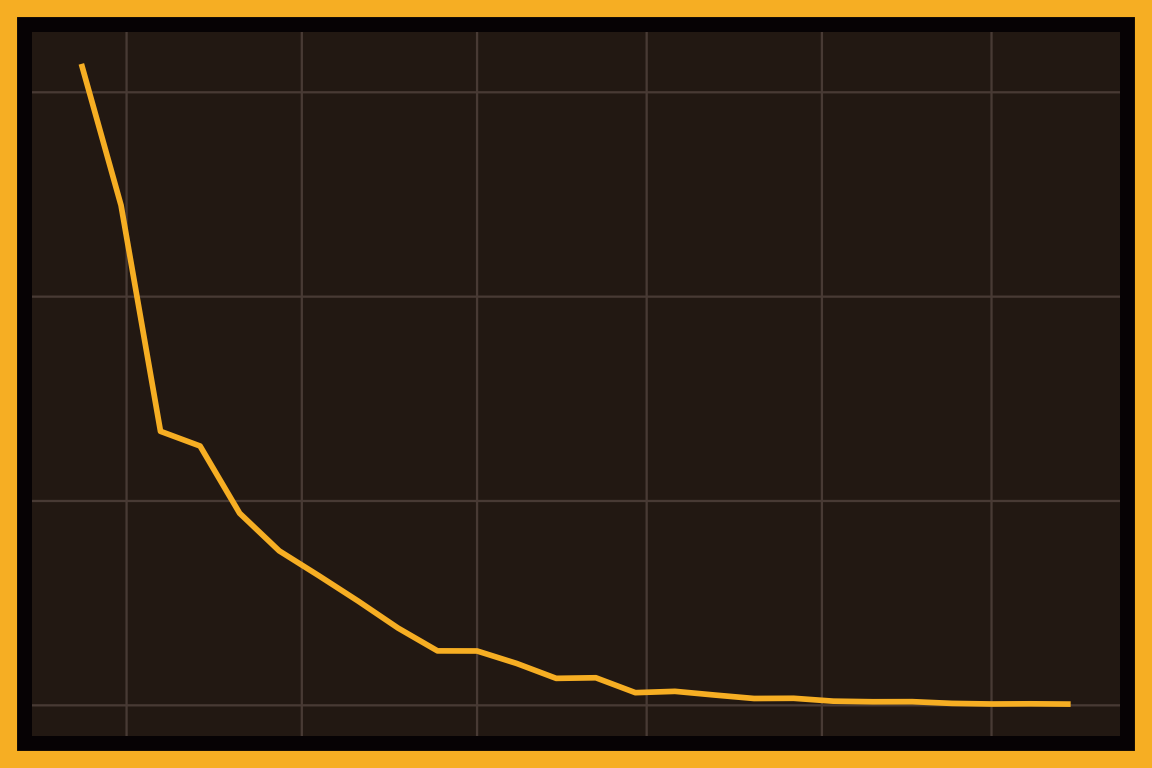
Line graphs
A line graph joins a number at each point in time with a line.3 Time goes on the x axis and the number goes on the y axis, so a line that goes up or down quickly from left to right shows a number that changes fast.4 Line graphs are the most common way to show how something changes over time.5 We can add points to show where each number was taken.6
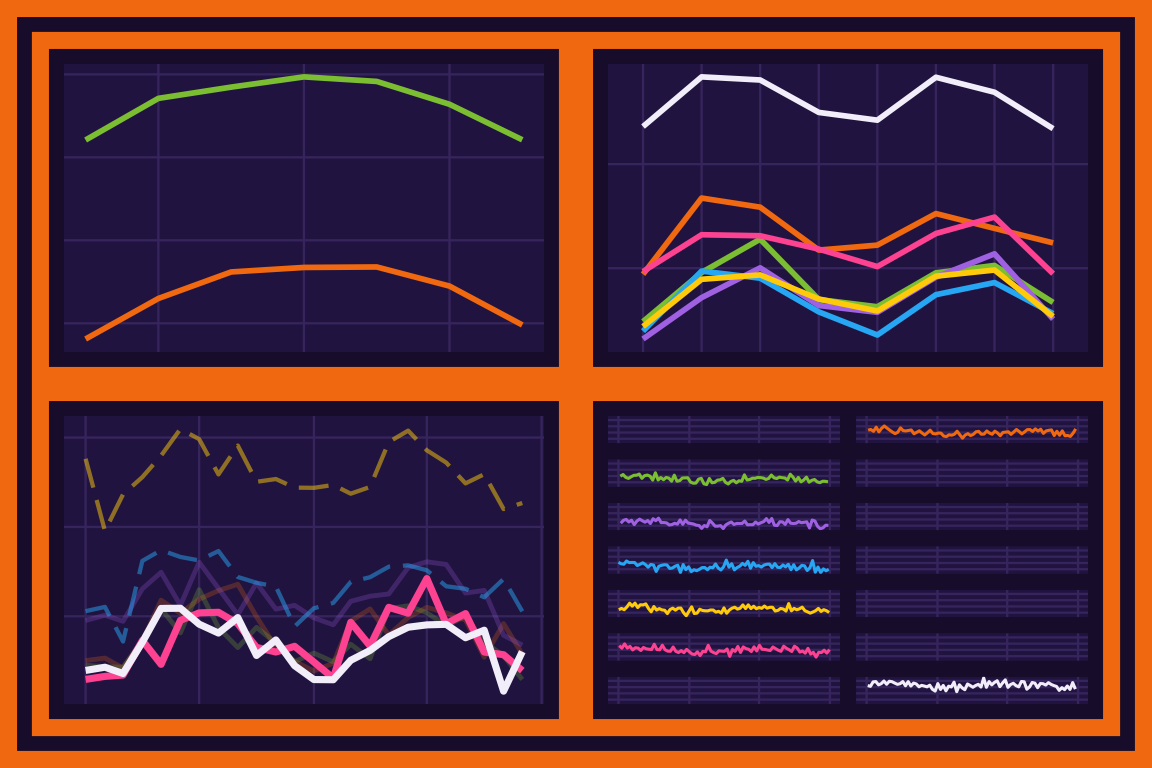
Grouped line graphs
Grouped line graphs show a line over time for each group in the same graph.7 They make it easy to compare how the groups change, and to see when one group passes another. Color, the kind of line, and how wide the line is can show which group is which or make a few of them stand out, and small graphs can show each group on its own.8 A key next to the graph tells us which line is which.9
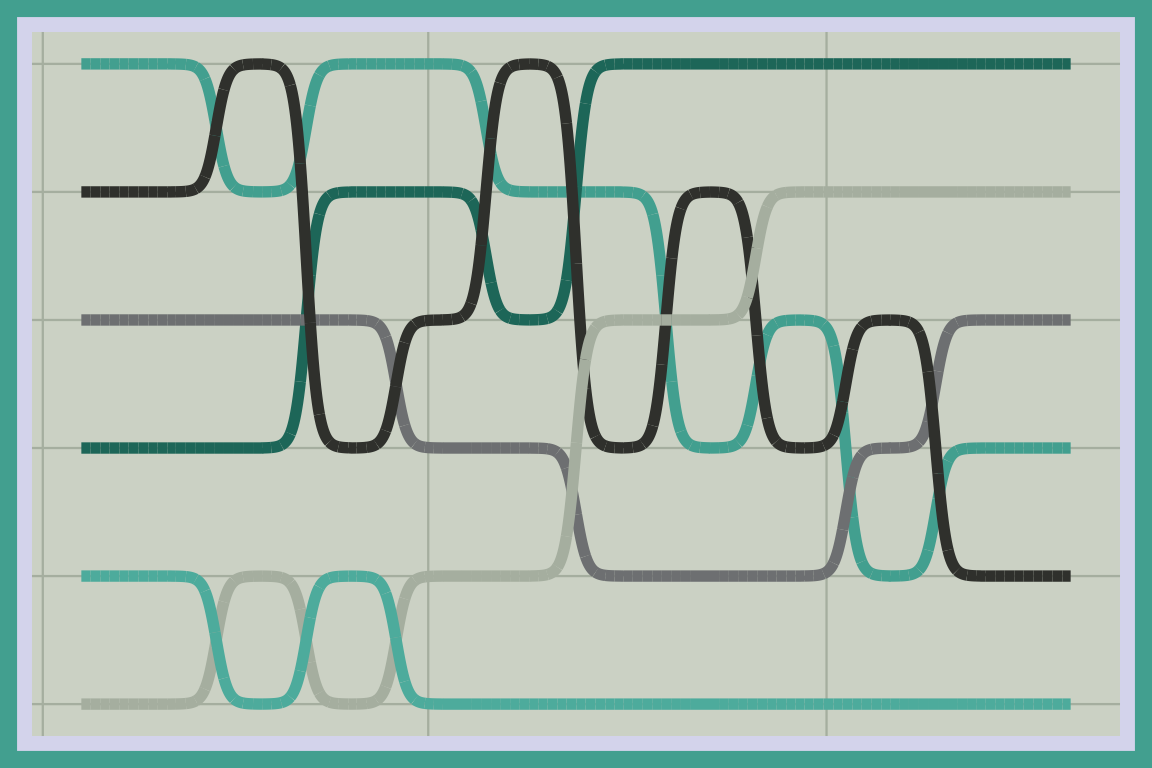
Bump charts
A bump chart shows how the place of each group in an order changes over time.10 Time goes on the x axis and the place goes on the y axis, with first place at the top. Lines join each group’s places, so we can follow who moves up and who moves down.11 A color for each group shows which is which, and a key or names on the lines tell us which line is which.12
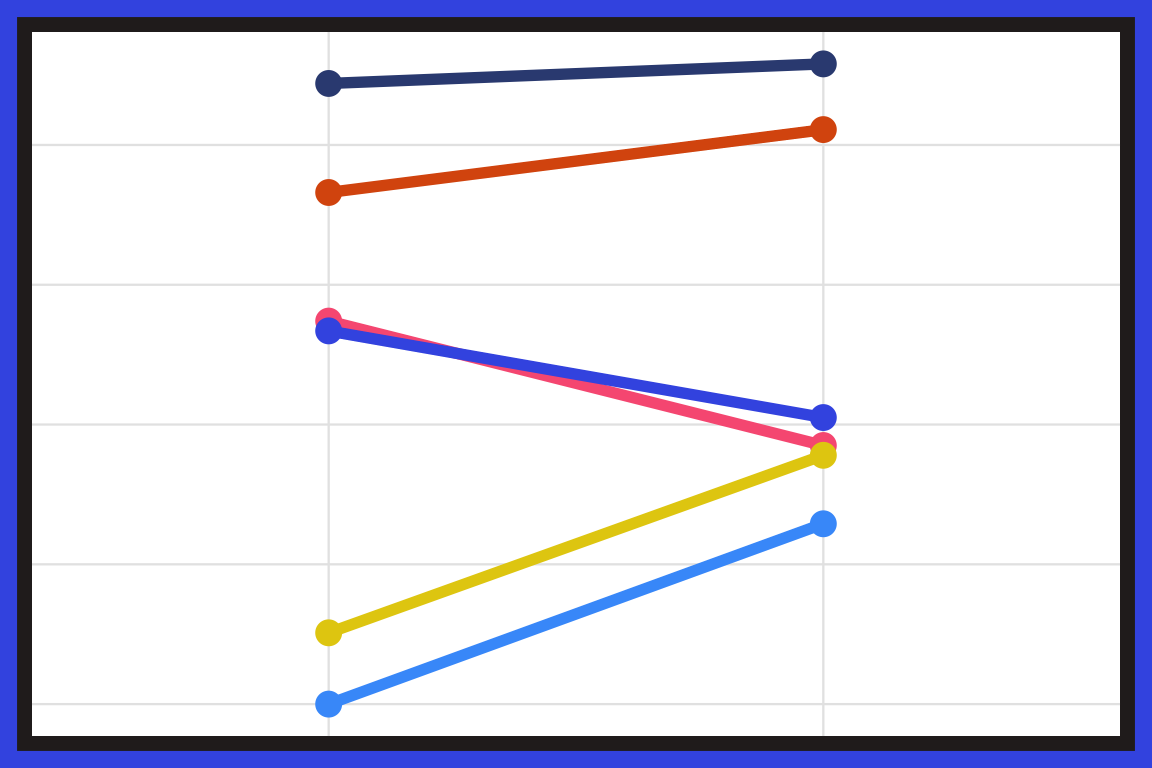
Slope graphs
A slope graph compares the numbers for several groups at two points in time. Each group gets a point at each time, and a line joins the two points. Whether each line goes up or down, and how far, shows how the group changed.13 Slope graphs are a simple way to show before and after for many groups at once.
Stream plots
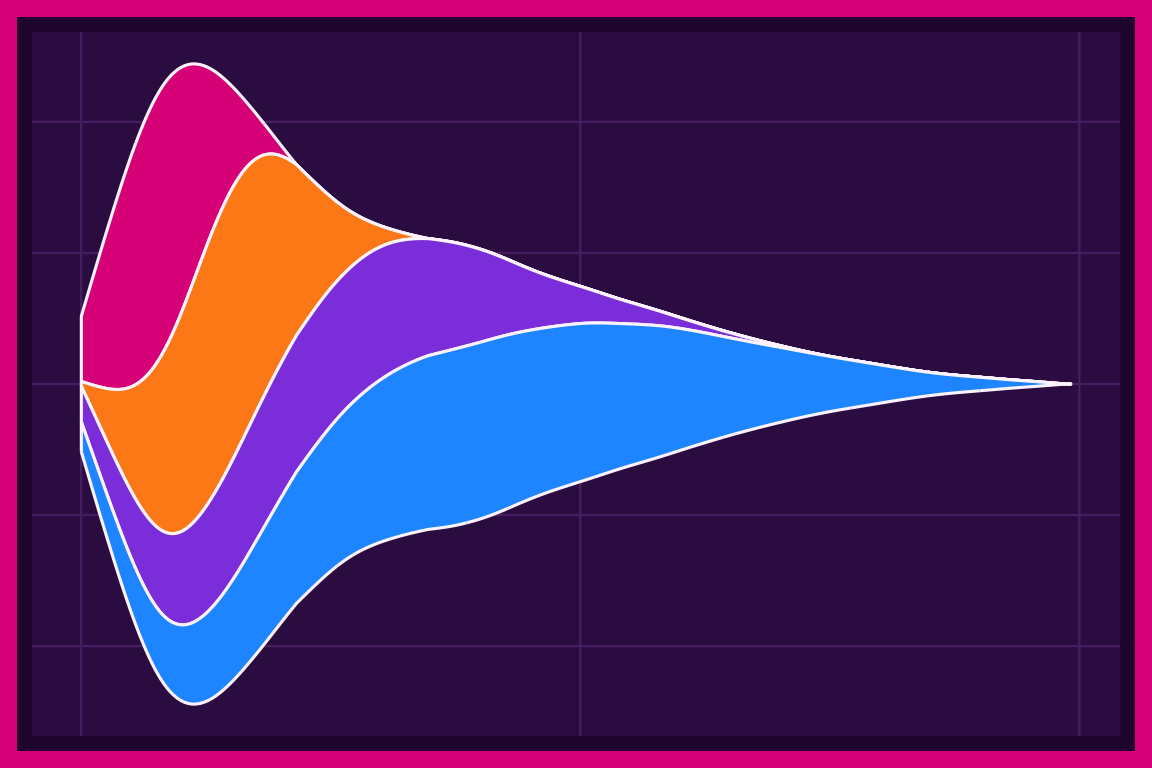
A stream plot puts the numbers for several groups over time one on top of the other, in a moving form that reaches out on both sides of a center line.14 How wide each group’s part is shows that group’s number at each point in time, and how wide all the parts are together shows the total.15 Stream plots help most when groups go up and down at different times. A color for each group shows which part is which, and a key or names tell us what each color means.16
Alluvial charts
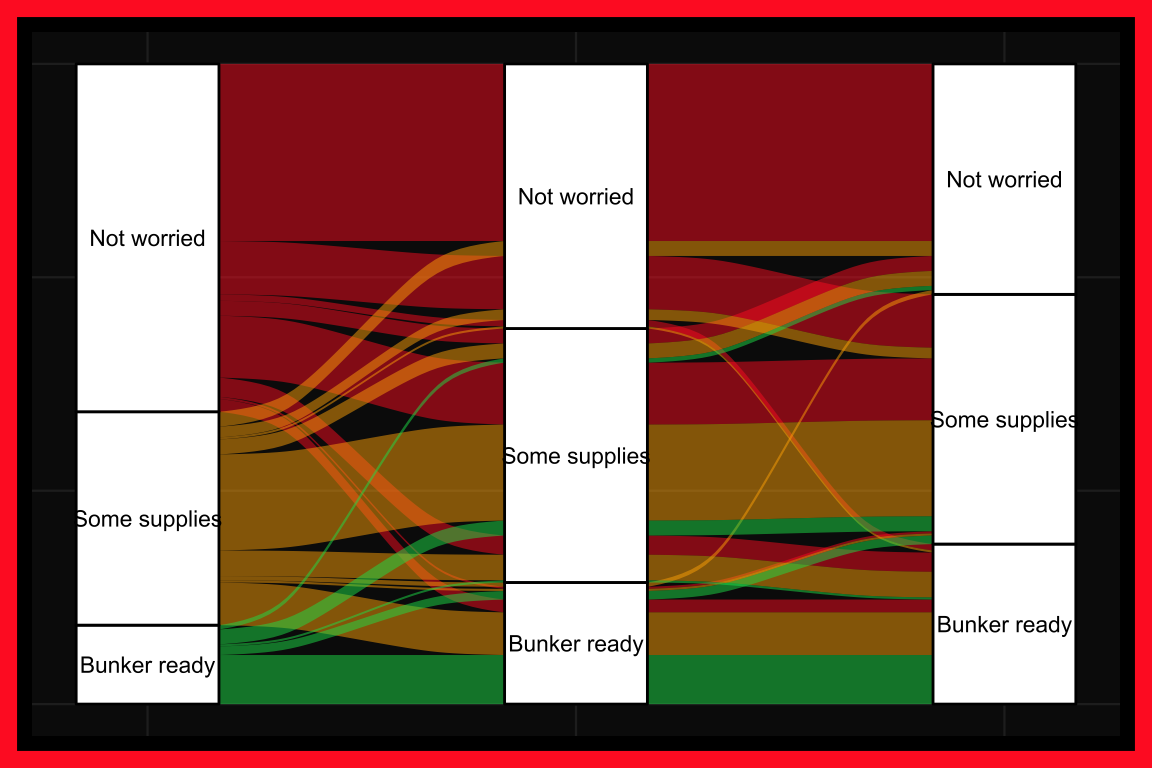
An alluvial chart shows how the members of a group move from one kind to another over time.17 Each point in time gets its own set of kinds, one on top of the other, and bands run between the sets to show how many members moved from one kind to another.18 How wide each band is goes up and down with how many members it holds.19 Color most often follows the kind each band starts in, and a key tells us what each color means.20
Instance charts
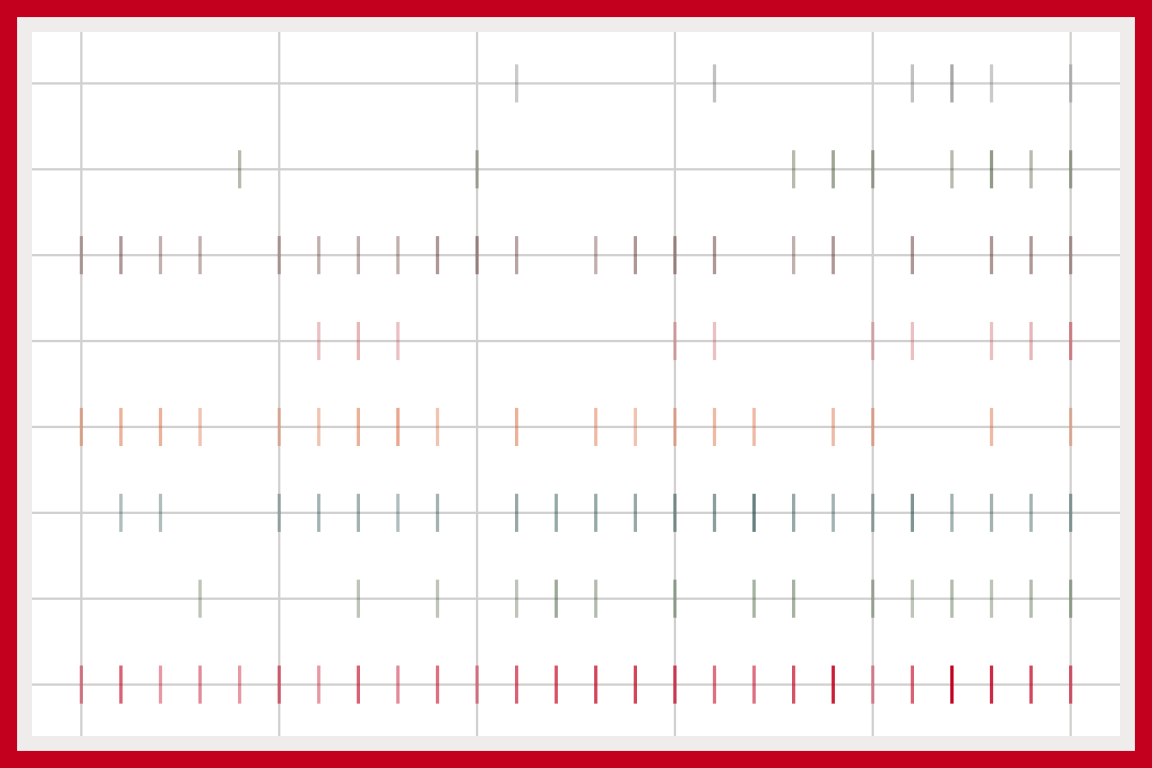
An instance chart puts a small mark at each time a kind of thing shows up.21 Time goes on the x axis and the kinds go on the y axis, so open places in a row show when a kind didn’t show up at all.22 How much we can see through each mark can show how often each one happened.23 Instance charts are a good way to show when things happened across many kinds.
These graphs display changes in quantitative or categorical variables over a dimension of time.↩︎
Date-time, date, year, month, quarter, etc.↩︎
A line graph connects a numeric value at each point in time with a line.↩︎
The slope of the line shows how fast the value is rising or falling.↩︎
A trend over time.↩︎
Points can be added to show where each measurement was taken.↩︎
A line over time for each group on the same axes.↩︎
Color, line type, and line width separate or highlight groups, and facets split the groups into small multiples.↩︎
A legend explains each line or color.↩︎
The rank of each group; the
yaxis is reversed so the top rank is at the top.↩︎Smooth lines connect each group’s ranks.↩︎
A legend or direct labels name each line or layer.↩︎
The slope of each line shows the direction and size of the change.↩︎
A stream plot stacks the values of several groups over time into a flowing shape centered around a middle line.↩︎
The thickness of each layer shows that group’s value, and the total thickness shows the overall value.↩︎
A legend or direct labels name each line or layer.↩︎
How the members of a group move between categories.↩︎
Each time point is a column of stacked categories (strata), and bands (alluvia) flow between the columns.↩︎
The width of each band is proportional to its count.↩︎
A legend explains each line or color.↩︎
An instance chart marks each time a category appears with a small tick.↩︎
Gaps in a row show when a category didn’t appear.↩︎
Transparency (
alpha) can show how often each instance occurred.↩︎